LTL Shipping: A Guide to Pricing, Processes, and Best Practices

Less-than-truckload (LTL) freight shipping is one of the most cost-effective and flexible ways to move goods. However, understanding how it works, how it's priced, and how to use it effectively takes more than a surface-level overview. This comprehensive guide serves as the definitive hub for LTL knowledge. 


In This Guide:

Whether you are a small business owner or an enterprise logistics manager, understanding these fundamentals is the first step toward an optimized and resilient supply chain.

What Are the Basics of LTL Freight Shipping?

What Are the Basics of LTL Freight Shipping?

The Definition of LTL

LTL stands for less-than-truckload. It refers to a method of freight shipping in which a shipper's cargo does not require the full capacity of a 48- or 53-foot trailer. You may also hear it called less-than-load or, in some contexts, partial truckload, though those terms describe slightly different scenarios. In standard LTL shipping, your freight shares trailer space with other shipments, each traveling to destinations along the same route.

This shared-space model makes LTL much more efficient. Rather than paying for an entire truck, you pay only for the portion of the trailer your shipment occupies. The carrier fills a trailer by consolidating shippers’ freight, and moves everything together, ultimately lowering costs for everyone.


Why Should Shippers Use LTL Freight?

LTL shipping offers a compelling combination of cost savings, efficiency, and flexibility that makes it the right choice for a wide range of businesses and shipment types. The primary benefits include:

  • Cost Savings: Sharing trailer space means sharing transportation costs. Shippers pay only for the space they use, not for an entire truckload.
  • Shipment Efficiency: LTL allows businesses to ship smaller quantities more frequently, supporting leaner inventory practices and faster replenishment cycles.
  • Reduced Handling: Modern LTL carriers like OD use load planning technology along with 28-foot pup trailers outfitted with deck bars to maximize capacity without double stacking. This allows the carrier to fill smaller trailers with shipments going to the same destination and reduce handling along the way.
  • Scalability: LTL grows with your business. Whether you're shipping a single pallet or dozens, LTL accommodates volume fluctuations without requiring you to book an entire truck.
  • Sustainability: Consolidating multiple shipments into fewer trucks reduces the total number of miles driven and the carbon emissions associated with freight transportation.


How Does LTL Differ from Full Truckload (FTL) Shipping?

The core difference between LTL and FTL (full truckload) shipping comes down to space, cost structure, and handling.
Features

LTL

Full Truckload

Shipment SizeLTL is designed for shipments that are too large for parcel carriers but not large enough to fill an entire trailer. Typically, that is one to six pallets, or roughly 150 to 15,000 pounds.FTL is the better choice when your shipment fills or nearly fills a full 48- or 53-foot trailer.
PricingLTL is priced per unit of space based on weight, mileage, dimensions, and freight class.FTL is priced for the entire trailer, regardless of how much space you use.
Transit TimeBecause LTL freight is consolidated with other shipments and may travel through multiple terminals, transit times are generally longer than FTL.FTL shipments travel point-to-point without consolidation stops. However, OD’s nationwide network of service centers, extensive equipment fleet, and driver capacity keep freight moving around the clock, resulting in industry-leading transit times that are often as fast as, or faster than, traditional truckload carriers.


How Does the LTL Shipping Process Work?

LTL Hub-and-Spoke Distribution

The LTL industry relies on a high-efficiency "hub-and-spoke" network. This model allows carriers to move significant amounts of freight across the country by centralizing the sorting process.

LTL_Moves_Map_600x338.jpg
  1. Pickup (The Spoke): A local driver collects shipments from multiple businesses in a specific area and brings them back to a local service center.

  2. Consolidation (The Hub): At the service center, freight is unloaded and sorted based on its final destination. It is then loaded onto a "line-haul" trailer with other shipments heading to the same region.

  3. Transit: The line-haul trailer travels to another regional hub near the destination.

  4. Final Delivery: At the destination service center, the freight is loaded onto a local delivery truck for the final mile.

What Are the Main Steps in the LTL Shipping Process?

Whether you're shipping for the first time or optimizing an existing operation, understanding the complete LTL process helps you plan more effectively and avoid unplanned costs. Here's a step-by-step overview:

icon_RateReferenceTool-48px.svg
STEP 1

Request a Quote

Provide shipment details such as origin and destination, weight, dimensions, and freight class to receive an accurate rate quote. Any required accessorial services, such as liftgate service or appointment delivery, should also be identified at this stage. 

icon_BOL-app-48px.svg
STEP 2

Prepare Shipping Documentation

Generate the Bill of Lading (BOL), which serves as the legal shipping contract and includes important shipment details, handling instructions, and delivery requirements. 

icon_schedule-pickup-48px.svg
STEP 3

Schedule and Complete Pickup

Once the shipment is ready, schedule a pickup with the carrier, noting any necessary accessorial services required to complete the pickup. A driver will collect the freight and transport it into the carrier’s network for processing and movement. 

icon_enroute-48px.svg
STEP 4

Transit Through the Carrier Network

During transit, LTL shipments move through a network of service centers where freight is sorted, consolidated, and routed efficiently toward its final destination. OD’s nationwide network helps keep shipments moving with industry-leading transit times.

icon_delivered-48px.svg
STEP 5

Final Delivery

The shipment is delivered to its destination by the final driver. If needed, accessorial services such as liftgate delivery, inside delivery, or appointment scheduling take place at this stage as well.

Before you can generate an accurate quote or create a BOL, you'll need the following information ready:

  • Origin ZIP code and destination ZIP code

  • Freight dimensions: length, width, and height for each piece or pallet

  • Total shipment weight

  • NMFC & Sub or freight class

  • Description of the commodity being shipped

  • Any required accessorial services: liftgate, residential delivery, inside delivery, limited access, delivery appointment, etc.

  • Declared value, if applicable

Having accurate information for all these fields is essential. Inaccurate dimensions or weight are among the most common sources of invoice discrepancies. Taking the time to measure and document your freight correctly before requesting a quote saves time and money downstream.

Shipping LTL freight across U.S. borders into Canada or Mexico involves additional layers of documentation, compliance, and coordination. Key considerations include:

  • Customs Documentation: International shipments require a commercial invoice, packing list, and country-specific customs forms in addition to the standard BOL. Missing or inaccurate paperwork is the leading cause of cross-border delays.

  • Regulatory Compliance: Every country has its own import/export regulations, duty structures, and commodity restrictions. Shippers are responsible for understanding and complying with these rules.

  • Transit Time Planning: Cross-border transit times can be longer than domestic moves and can be unpredictable depending on border crossing volume and customs clearance speed. 

OD provides dedicated cross-border freight solutions for shipments to Canada, Mexico, Alaska, Hawaii, Puerto Rico, and the Virgin Islands. Consult OD’s Global North America resources for country-specific documentation requirements and best practices.

How Do National and Regional LTL Carriers Differ?

When selecting an LTL carrier, one of the first decisions is whether a national or regional carrier best fits your needs.

National carriers like OD operate their own network of service centers across the continental U.S. and greater parts of North America. For businesses that ship across regions, or even cross-border, using a national carrier delivers a seamless shipping experience with higher visibility during transit.


What Role Do LTL Terminals Play?

LTL terminals, also known as service centers, are the operational hubs of the freight network. Each OD service center supports a specific geographic market and performs several critical functions. These functions include receiving freight from local pickups, consolidating shipments for linehaul transportation, processing inbound freight for final-mile delivery, and managing freight that requires appointment scheduling or specialized handling.

What sets OD apart is the strength of our local service center teams. Customers have direct access to knowledgeable employees who understand their local customer base and can assist with scheduling, shipment visibility, delivery coordination, and ongoing logistics support. Combined with OD’s nationwide network, these local teams help ensure reliable communication, responsive service, and consistent freight movement from pickup through final delivery.

How Is LTL Freight Pricing Determined?

The Factors that Affect LTL Pricing

LTL pricing is more nuanced than other shipping modes because it is based on the density and stowability of the freight, rather than just weight or distance. 

Freight_Decision_Makers_Dock_Shipping_600x522.jpg

The key factors that drive LTL freight rates include:

  • Weight and Volume: While weight is a primary factor, carriers also consider how much space the shipment occupies on the trailer floor.

  • Freight Class (NMFC): The National Motor Freight Traffic Association (NMFTA) maintains the NMFC system, which categorizes freight into 18 classes ranging from class 50 to 500. Classes are determined by density, stowability, handling, and liability.

  • Distance and Density: Longer routes naturally cost more, and low-density freight is more expensive per pound because it takes up more space while not maximizing weight capacity.

  • Accessorial Fees: These are charges for extra services, such as residential delivery, liftgate requirements, or "limited access" locations like schools or construction sites.


Common Questions Around Freight Quotes

Freight class is a standardized classification system developed by the National Motor Freight Traffic Association (NMFTA) through the National Motor Freight Classification (NMFC). Every commodity shipped via LTL is assigned a freight class from 50 to 500 based on four characteristics: density, stowability, handling, and liability.

Accuracy in LTL quoting prevents costly billing discrepancies. Shippers should provide precise pallet counts, certified weights, and exact dimensions, including any overhang or Do Not Stack cones. Utilizing an established shipper account ensures that negotiated discounts are applied.

An LTL invoice typically consists of three primary elements: the base line-haul rate, a variable fuel surcharge that tracks market indices, and accessorial fees for specialized services. Established shippers benefit from negotiated discounts, which significantly reduce the line-haul portion before other fees are added.

Accurate shipping data helps create stronger, more efficient partnerships between shippers and carriers. Providing complete and consistent shipment information, including dimensions, weight, density, freight class, and required accessorial services, helps improve pricing accuracy and support more efficient freight planning. Analytics and benchmarking tools can also help businesses identify shipping patterns, improve forecasting, and make more informed transportation decisions over time.

Density is calculated by dividing total weight by total cubic volume. To find volume, multiply length x width x height in inches and divide by 1,728. Density calculators are also a helpful tool. 

  • Example: A 500-lb pallet at 48"x40"x48" occupies 53.3 cubic feet.
  • Density: 500 ÷ 53.3 = 9.4 pcf. Higher density typically results in a lower freight class.

How Should Shippers Prepare LTL Freight Shipments?

Best Practices for Packaging and Palletization

Following these primary packaging tactics will help ensure your freight is prepared for shipping. The right carrier will also work with you to provide packaging recommendations tailored to your specific freight and shipping requirements. OD uses trailers equipped with a deck bar system, which allows freight to be secured without stacking pallets directly on top of one another. However, proper packaging remains essential to protect your shipment throughout transit.

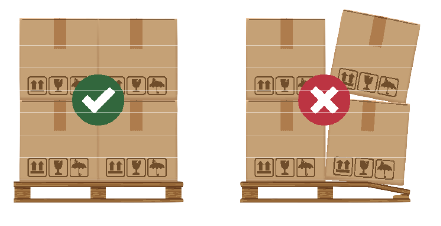
  • Use Sturdy Pallets: Ensure pallets are in good condition with no broken boards or structural damage. 

  • Crate or Box Securely: Use heavy-duty corrugated boxes and fill empty spaces with dunnage to help prevent internal shifting during transit. 

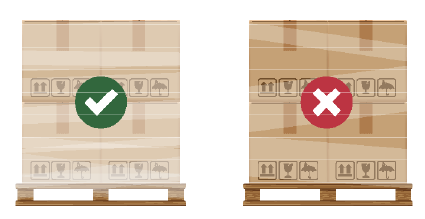
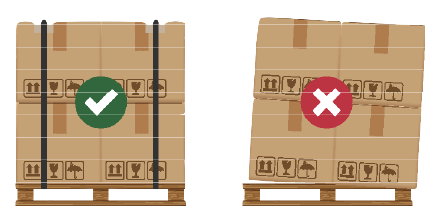
  • Palletize and Wrap: Use high-quality stretch wrap or metal bands to secure boxes to the pallet. The wrap should extend to the base of the pallet to help prevent the load from shifting or sliding. 

  • Remove Old Labels: Before shipping, remove or cover any outdated shipping labels or markings to help avoid routing confusion or delivery delays. 

  • Label Clearly: Place labels on all four sides of the shipment and include the BOL number, PRO number, and complete address information. 

  • Choose a Carrier Focused on Freight Protection: Select a carrier that prioritizes careful freight handling, uses protective measures such as dunnage, and maintains a low claims rate to help reduce the risk of damage during transit.


Infographic_Packaging_Tips_wrap-freight_425x219.png

Tip 1

Fully wrap cartons from top to bottom, including the pallet, with quality shrink wrap.

Infographic_Packaging_Tips_no-broken-pallets_441x226.png

Tip 2

Don't use broken or damaged pallets.

Infographic_Packaging_Tips_secure-with-bands_425x219.png

Tip 3

If needed, use banding to secure cartons to the pallet.

  • Shipper name, address, and contact information

  • Consignee name, address, and contact information

  • Detailed description of the freight, including commodity, piece count, and packaging type

  • Total weight and freight class

  • Declared value (if applicable)

  • Required accessorial services

  • Special handling instructions

  • Tracking Number (or PRO Number)

  • Signatures from the shipper and driver (made at the time of pickup)

What Documentation Is Required for LTL Shipments?

Every LTL shipment requires a set of documents that establish the terms of carriage, identify the freight, and enable tracking throughout the journey. The most important of these is the Bill of Lading.

Bill of Lading (BOL): The BOL is the foundational document of every freight shipment. It is simultaneously a contract of carriage between the shipper and the carrier, a receipt confirming that the carrier has taken possession of the freight, and a title document that may be required for payment.

Many shippers now use electronic Bills of Lading (eBOLs) to streamline shipment processing, improve documentation accuracy, and simplify recordkeeping. Digital documentation can help reduce manual errors, improve shipment visibility, and support faster communication between shippers and carriers. For cross-border shipments, additional customs and import/export documentation may also be required to help ensure smooth clearance and avoid delays at the border.


Accessorial Services and When to Use Them

Accessorials are specialized services beyond standard dock-to-dock transport. Common options include liftgate service for locations without docks, residential delivery for non-commercial addresses, and inside delivery for placement beyond the entrance. Additional services like appointments, notifications, and limited access (schools/construction sites/trade shows) ensure successful delivery in complex environments.

How Can You Choose the Right LTL Carrier?

Criteria to Evaluate an LTL Carrier

Carrier selection is one of the most consequential decisions a shipping manager makes. The right carrier is the one that delivers the best total value, not just the least expensive initial cost. Evaluate LTL carriers on these characteristics:

  • On-Time Delivery Performance: This is the most critical metric. Ask carriers for their published on-time rates and verify them against independent sources.
  • Claims Rate: A low claims rate signals that the carrier handles freight carefully.
  • Network Coverage: Does the carrier serve all the lanes you need? Can they handle your freight without handing it off to an interline partner? 
  • Technology Capabilities: Modern shippers need more than a track-and-trace website. Evaluate carriers on the quality of their API integrations, TMS compatibility, digital quoting, and BOL tools.
  • Pricing Transparency: Can you get a clear, itemized rate quote? Are accessorial charges published and easy to understand? Hidden fees erode the value of a low initial rate.
  • Customer Service Quality: When things go wrong, you need a carrier with responsive, knowledgeable customer service. 
  • Sustainability Commitments: As sustainability reporting requirements grow, knowing your carrier's environmental performance becomes increasingly relevant to your own ESG reporting.

How Can Data and Performance Metrics Guide Carrier Selection?

Independent, data-driven evaluations such as the Mastio & Company LTL Carrier Customer Value and Loyalty Study* are the most reliable way to assess carrier performance beyond sales pitches and marketing materials. 

Beyond external surveys, shippers should use their own performance data to evaluate carriers. Track these KPIs over time for each carrier in your network:

  • On-time delivery percentage by lane

  • Transit time variance

  • Claims frequency and dollar value

  • Billing accuracy rate

  • Customer service responsiveness and resolution time

Building a scorecard based on these metrics gives you an objective foundation for carrier consolidation, rate negotiations, and service accountability conversations.


Interested in Starting an LTL Shipment?

Shippers choose OD for our premium service and one of the lowest claims rates in the industry. We take our role as a critical link within your supply chain with great responsibility and care.  Our team can help you access pricing tailored to your needs and ensure your freight arrives on-time and damage-free. Connect with an OD Solutions Specialist and start shipping smarter today.

How Is Technology Changing LTL Freight Shipping?

Digital Tools and APIs Available for LTL Logistics

The digitization of freight logistics has accelerated dramatically over the past decade, and LTL shipping has been transformed by it. The most impactful technologies available to shippers today include:

  1. Carrier Web Portals: Platforms like ODFL.com allow shippers to quote, book, and manage documents entirely online, reducing human error and streamlining processes.

  2. Shipping APIs: These provide a direct digital "handshake" between a carrier and your own internal TMS or ERP, automating data flow without manual portal logins.

  3. Transportation Management Systems (TMS): A centralized software hub used to plan, execute, and optimize freight across multiple carriers simultaneously.

  4. Electronic Bill of Lading (eBOL): Digital documents that speed up processing and ensure data consistency from the dock to the back office.

How Does Real-Time Tracking Improve Visibility and Efficiency?

Real-time freight visibility is the baseline expectation for shipping. When shippers have access to timely, relevant location data, they can transform their entire supply chain from a reactive model to a proactive one.

Internally, this data allows for precise operational planning, such as staffing receiving docks exactly when needed and reducing inventory safety stocks. 

Externally, it modernizes customer communication by providing automated, accurate arrival windows, which drastically reduces "where is my order" inquiries. 

Finally, visibility is the key to exception management. If a delay occurs, operations teams can see it immediately and upgrade shipment service levels or notify customers before the delay turns into a service failure.

OD provides multiple tracking options. Real-time shipment tracing is available 24/7 on ODFL.com using your PRO number, BOL number, or PO number. For shippers who need tracking data integrated directly into their own systems, OD's Shipping API enables automated, real-time status updates without the user logging into the portal.


How Can Analytics Help Optimize Rates and Routes?

Freight analytics transforms shipping data from a historical receipt into a forward-looking management tool. By leveraging data infrastructure, shippers can achieve the following:

  • Analyze Freight Density: Monitor shipment weights and dimensions over time for classification and scale accuracy

  • Track Carrier KPIs: Use hard performance data like on-time percentages and claim ratios.

  • Model Cost Impacts: Simulate the savings of consolidating multiple LTL shipments or adjusting your shipping frequency.

OD’s platform supports this by allowing account holders to review historical shipping data and invoice details, which can be fed directly into your own analytics environment via API or EDI.


A sudden change in an NMFC code can directly impact your shipping costs. It is vital to review your products regularly against current standards published by the NMFTA to ensure billing accuracy.


NMFTA Reminder

What Regulations and Safety Standards Apply to LTL Freight?

Behind Freight Classifications and Packaging Standards

The NMFTA is the primary authority on LTL freight classification in the United States. They maintain the NMFC, a standardized system that assigns 1 of 18 classes to every commodity. The class is determined by four key transportability characteristics: density, stowability, ease of handling, and liability. 

Because the NMFTA updates these standards periodically to reflect new industry practices and commodity definitions, a sudden change in an NMFC code can directly impact your shipping costs. It is vital to review your products regularly against current standards published by the NMFTA to ensure billing accuracy.


What DOT and FMCSA Regulations Affect LTL Carriers?

LTL carriers operate under a rigorous safety framework overseen by the Federal Motor Carrier Safety Administration (FMCSA). These regulations are designed to protect the public and ensure the reliability of the national supply chain. Key regulatory areas include:

  1. Hours of Service (HOS): Strict limits on driving time to prevent fatigue-related accidents.

  2. Driver Qualification: Mandatory CDL licensing, background checks, and drug/alcohol testing.

  3. Vehicle Safety: Federal standards for brakes, lighting, and tires, verified by daily inspections.

  4. Hazardous Materials: Specialized PHMSA rules for the packaging, labeling, and placarding of dangerous goods.

Shippers also share compliance burdens, particularly regarding the accurate documentation and marking of any hazardous materials tendered for transport.


Canada_Shipper_Customs_ImportExport_BrokerageExpeditedOnDemand_RateEstimates_Bilingual_600x522.jpg

How Can Shippers Stay Compliant with Cross-Border Regulations?

Shipping LTL to Canada or Mexico requires navigating both U.S. export laws and destination import requirements. To avoid costly border delays, shippers should focus on these five critical areas:

  • Accurate Invoicing: The commercial invoice must clearly state the goods' value, country of origin, and correct HS (Harmonized System) tariff codes.

  • Broker Engagement: Utilizing a licensed customs broker simplifies the clearance process and ensures duties are paid correctly.

  • Specific Documentation: Canada and Mexico have unique forms beyond the standard Bill of Lading. Always consult country-specific resource pages.

  • Prohibited Goods: Verify that your commodity is not on a restricted list for the destination country.

  • Lead Time: Always factor in extra time for customs inspections when planning your cross-border shipping.

What Should You Know About Insurance and Liability Coverage?

Protecting the value of your cargo requires understanding the difference between carrier liability and independent insurance. Under the Carmack Amendment, carriers are liable for loss or damage caused by their negligence, but this coverage is often limited by the freight's class or the carrier’s specific tariff.

If your cargo value exceeds these standard limits, you may choose to declare a higher value on the Bill of Lading for an additional fee. If damage occurs, always document the issues with photos immediately and note exceptions on the delivery receipt before signing to preserve your right to a claim.


What Are the Next Steps for Getting Started with LTL Shipping?

LTL shipping offers a strategic combination of advantages that make it the ideal choice for businesses across various industries. By sharing trailer space, companies can achieve significant cost-effectiveness, paying only for the footprint their freight occupies rather than a full truckload. 

When you partner with a premium carrier like OD, you gain industry-leading reliability, evidenced by a 99% on-time delivery rate, and the flexibility to scale from standard regional hauls to complex cross-border or expedited logistics.

Ready to optimize your supply chain? Follow these four steps to begin shipping with confidence:

Establishing an account will provide tailored rates with discounts based on your specific business needs, credit terms, and a full suite of digital management tools on ODFL.com.

Use the online rate estimator for an instant figure or request a customized lane analysis from a specialist for high-volume needs.

Visit the Freight Knowledge Center for essential "Quick Tips" on BOL creation, packaging guides, and international shipping requirements.

Connect with an expert who understands your specific industry requirements and local shipping lanes to build a tailored program.

Freight Documentation

Providing complete and accurate information on weight, dimensions, and class when requesting a freight quote and on your Bill of Lading will help ensure your freight invoice matches the amount quoted prior to shipping. Including the specifications of your shipment on your BOL, such as freight class, dimensions, total weight, origin and destination addresses, additional services required for pickup or delivery and the correct paying party, will help prevent discrepancies between the freight quote and invoice amount as well as delivery delays.

A BOL must include the origin/destination addresses, contact information, total weight, pallet count, freight class, NMFC number, and any special instructions like "do not stack" or "liftgate required." A BOL must also be signed by both the shipper and the driver at the time of pickup.

These are fees for services that go beyond standard dock-to-dock delivery. Common accessorials include residential delivery, inside delivery, liftgate service, and appointment notifications.

Most carriers use a PRO Number, which is a unique 9-11 digit tracking number assigned to the shipment manually, by the driver, at the time of pickup or electronically if a shipment is booked online. You can enter this number on the ODFL.com portal for real-time tracking.

The LTL Industry

LTL carriers operate under federal regulations administered by the FMCSA and DOT, covering driver hours of service, vehicle safety standards, driver qualification, and hazardous materials handling. Freight classification is governed by the NMFTA's NMFC system.

Cross-border shipments must comply with U.S. export regulations and the destination country's customs and import requirements. Shippers have compliance responsibilities as well for hazardous materials classification, packaging, and documentation.

Freight class is a key component of a freight rate as well as the coverage provided by a carrier and special packaging requirement. It is a standardized classification assigned to LTL commodities by the NMFTA's National Motor Freight Classification system. It's based on four factors: density, handling requirements, stowability, and liability. 

Density determines your freight class which is a key component of your freight rate. Ensuring correct density calculations will help prevent reclassifications and invoice discrepancies.

Choosing the Right Service

Not every LTL carrier provides the same level of service. This guide offers specific questions to ask a potential partner. Even if a carrier offers a lower initial price to ship, it is important to also consider the service they provide. The bottom line on your freight bill is only one element of your business’ total cost of transportation. To understand that total cost, you must consider potential problems like damaged shipments, delayed deliveries, fines, chargebacks, remanufacturing costs, overtime pay to your employees, and even damage to your reputation and relationship with your customer. 

At Old Dominion, through our industry-leading service, our shippers often reduce their total cost of transportation. We provide a premium service experience that you and your customers can count on.

Most LTL carriers, including OD, offer expedited services. Whether your freight needs to deliver faster than the standard transit time, before noon, within a time-specific window, or even over a weekend, OD offers a full suite of Expedited services to get your freight where you need it, when you need it. You can learn more about OD’s Expedited Services here.

LTL is typically the best choice when your shipment is too large and heavy for parcel carriers but doesn't require a full truckload or alternative truckload services. LTL provides the right balance of cost, coverage, and service.

Yes. OD provides comprehensive cross-border services to and from Canada and Mexico, handling the complex documentation and customs compliance required for international transit. We also offer service to broader U.S. territories including Hawaii, Alaska, Puerto Rico, and Guam.

*The Mastio Award is Property of Mastio & Company.